Temples
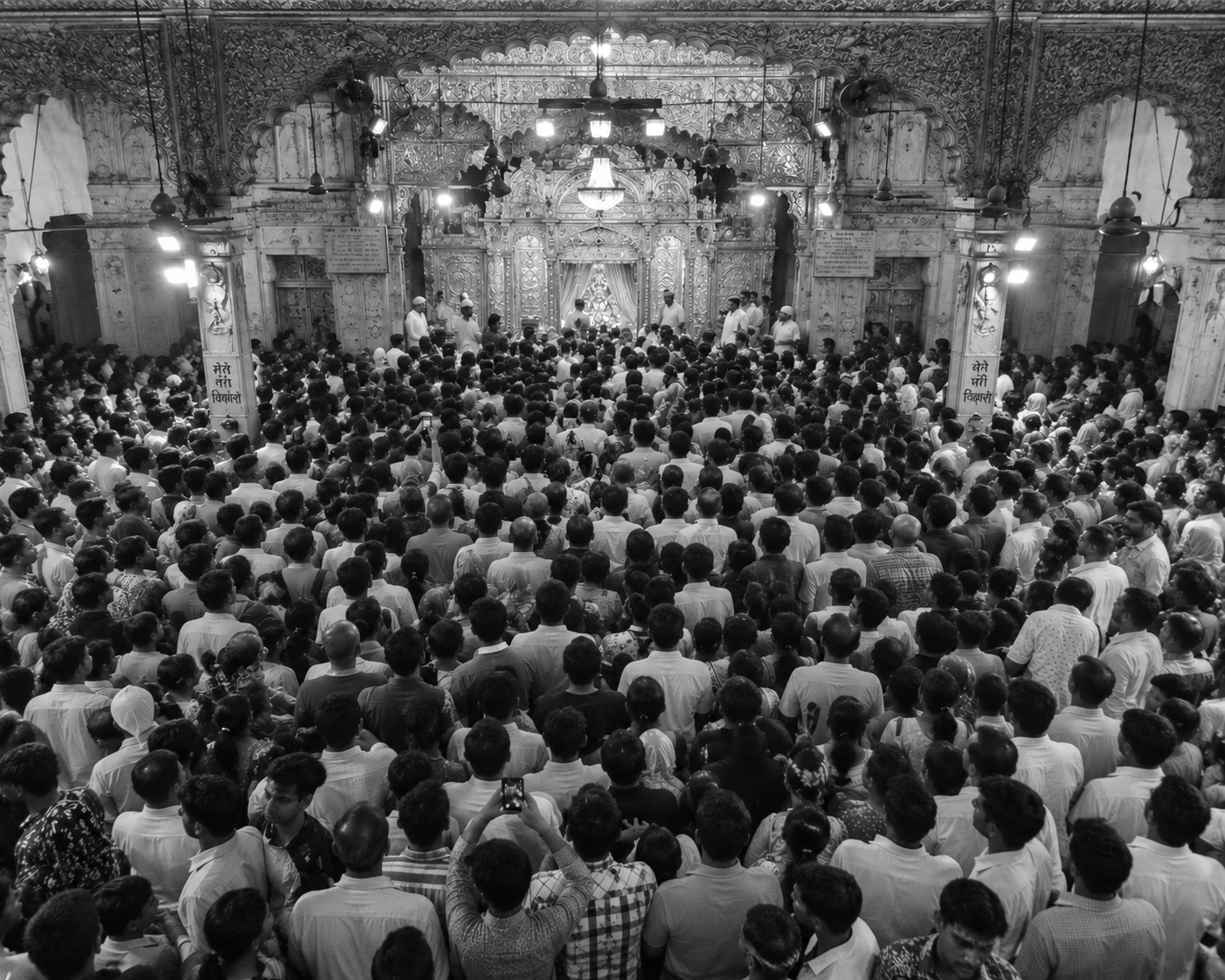
I was born to devoutly religious parents. God was woven into our everyday lives, so it wasn’t unusual for us to wake up one morning at 6 am and decide, almost on a whim, to drive four hours each way to visit a temple for whichever god was revered in our family.
We’d pack water into a large thermos, pack some home-cooked food, and as soon as the driver showed up in the morning, we’d be on the road within the hour.
During festive seasons, the small temple town would swell with visitors. Vehicles were restricted, the temple itself overrun with people, and there was a strange sense of suffocation even inside a large, airy hall. Being a child, all I could see was a wall of tall adults elbowing their way forward for a fleeting glimpse of the idol.
My father, being reasonably tall, would head to the back of the crowd, glance at the deity, offer a quick prayer, and be done within minutes. My mother, on the other hand, would push her way to the front, lean over the raised podium, and strain for that elusive glimpse. Once she’d had her look, she’d lift me up and lean me forward to see too. I was never quite sure where to look, but just to keep her satisfied, I’d tell her I’d seen it, and she’d look content.
Every trip, I’d squint harder, trying to piece together what god actually looked like inside that dim room, thick with the smoky haze of incense sticks. All I ever managed to make out was a gold-plated black silhouette, and that was about it. The actual face, the features, stayed a permanent mystery to me.
The crowd was, more often than not, inconsiderate and self-absorbed, as though every blessing available had to be claimed solely for themselves. Inside the temple, no one spared a thought for children, women, or anyone in their way. City folk always looked visibly rattled by the chaos, while the village crowd seemed to relish the struggle. Everyone carried something rare, a black lotus from the far east, a sweet from the far south, as if devotion needed to be proven through the rarity of an offering. It puzzled me, even then, why any of it mattered so much.
But the child in me assumed it must matter. Once we were done inside, we’d step back out, pick up a few local delicacies, and if I was lucky, my mother would buy me a small toy, easily my favorite part of the whole trip. She’d shop for the small, trivial things tied to her prayers and rituals, and then we’d walk back toward the car. The path wound through shops and houses, and it was always scorching hot, wet, slushy, and muddy underfoot. I hated that feeling under my feet. Eventually we’d wash up, climb into a car that felt like an oven, and start the drive back. As we drove out of the city, my mother would fish out the “prashad” along with home-cooked poori and aaloo, roll them together, and we’d eat in the car.
By late evening, we’d be driving back into our home. That was what one Saturday every month looked like. Despite how uncomfortable the whole experience could be, it taught me to breathe easy while wallowing in the smell of sweat of strangers, in crowds pressed right up against me to elbow my way through a temple full of strangers, and to keep walking even when the ground under my feet was anything but pleasant.
That’s how temple visits are etched permanently into my memory: the same ritual, playing out at a new temple, over and over, all through my life.
Comments
Loading comments…